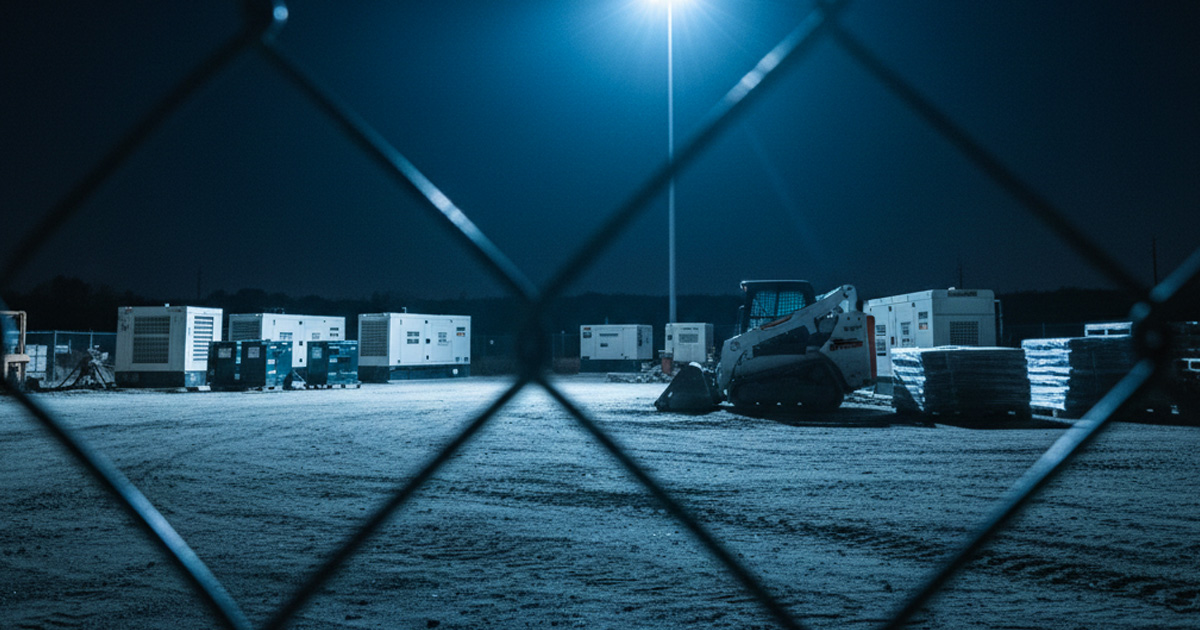
Last Tuesday at 3AM, someone cut the fence at a jobsite in Phoenix. By the time the crew arrived at 6:30AM, three generators, a pallet of copper wire, and $8,000 worth of power tools were gone. The project manager spent his morning filing police reports and insurance claims instead of overseeing construction. That single incident delayed the project by four days and cost the contractor nearly $25,000 when you factor in replacements, downtime, and increased insurance premiums.
This isn't an isolated incident. According to the National Equipment Register (NER), construction site theft costs the industry over $1 billion annually, with only about 25% of stolen equipment ever recovered. Thieves love construction sites for predictable reasons: they're often remote or in transitional neighborhoods, they contain high-value equipment that's easy to resell, and security is frequently minimal or nonexistent during off-hours.
The good news? Prevention is significantly cheaper than replacement. Construction managers who implement layered security strategies typically see theft attempts drop by 80-90% and recover their security investment within the first prevented incident. This guide breaks down what thieves actually target, the security gaps that make you vulnerable, and practical strategies to protect your assets without breaking your budget.
What Thieves Actually Steal (And When They Strike)
Understanding theft patterns helps you prioritize protection efforts. While any unsecured item is theoretically at risk, experienced construction thieves target specific categories with predictable timing.
Heavy Equipment: The Big-Ticket Targets
Skid steers, mini-excavators, generators, and compact loaders top the list for organized theft rings. A single skid steer can sell for $15,000-40,000 on the black market, and they're surprisingly easy to transport with the right trailer. Generators are particularly attractive because they're high-value, portable, and universally needed—making them easy to fence.
The most commonly stolen equipment includes:
- Skid steers and mini-excavators (easy to transport, high resale value)
- Portable generators ($2,000-10,000 each, universal demand)
- Compaction equipment (rollers, plate compactors)
- Small loaders and forklifts
Equipment theft often spikes during the early phases of construction when foundations are being poured and heavy machinery is present but perimeter security isn't fully established yet.
Copper Wire and HVAC Units: The Scrap Gold
Metal theft remains a persistent problem because stolen copper and aluminum have immediate cash value at scrap yards. A typical residential HVAC unit contains $500-2,000 worth of copper and aluminum, and experienced thieves can strip one in under 15 minutes. Copper wiring—especially the heavy-gauge wire used for electrical panels—is equally attractive and easier to transport.
New construction sites are particularly vulnerable to metal theft because:
- Wiring is often installed before walls are closed, making it accessible
- HVAC units sit unsecured on rooftops or ground pads for days or weeks
- Scrap metal prices fluctuate, creating waves of theft when copper prices spike
- Metal is untraceable once stripped and sold to recyclers
Tools and Small Equipment: Death by a Thousand Cuts
While individual power tools might only cost $200-500, losing ten tools in a single night adds up fast. Cordless tool systems are especially vulnerable because thieves can grab batteries, chargers, and multiple tools in seconds. The real cost extends beyond replacement—you lose productivity while workers wait for new tools and deal with insurance claims.
Commonly stolen small items include:
- Cordless drill and impact driver sets
- Demo hammers and rotary tools
- Tile saws and cutoff tools
- Laser levels and surveying equipment
- Gas-powered cutoff saws
Timing Patterns: When Thieves Strike
Experienced construction thieves understand project schedules and exploit predictable vulnerability windows:
Weekends and Holidays: Three-day weekends are prime theft windows. Friday night through Monday morning gives thieves 60+ hours with minimal risk of interruption. Holiday weekends are even worse—Memorial Day, Labor Day, and July 4th see theft spikes of 40-60% according to industry data.
Early Project Phases: The first 30-60 days of construction see the highest theft rates. Perimeter fencing may be incomplete, lighting isn't installed yet, and expensive equipment arrives before security systems are operational.
Late Afternoon/Early Evening: Many thefts occur during the transition between day shift ending and security guards arriving (if you have them). That 5:00-8:00PM window when sites are empty but not yet secured is surprisingly vulnerable.
Equipment Delivery Days: Thieves scout sites and note when new equipment arrives. A skid steer delivered on Tuesday afternoon might be stolen Tuesday night before you've even had a chance to use it.
The 5 Security Gaps That Cost You
Most construction site theft isn't sophisticated Ocean's Eleven heists—it's opportunistic criminals exploiting obvious vulnerabilities. Here are the five security gaps that thieves count on finding.
Gap #1: No Perimeter Visibility After Dark
Fencing keeps honest people out, but it doesn't stop determined thieves. What actually deters theft is the risk of being seen. Sites without adequate lighting and surveillance cameras give thieves cover to operate with impunity.
The problem compounds because:
- Thieves can cut fence links or climb over in seconds
- Once inside, darkness conceals their activity from passing vehicles or neighbors
- Without cameras, there's no evidence of how entry occurred or who was responsible
- Police response to "alarm at construction site" is often delayed because most are false alarms
Effective perimeter security requires layered approaches: physical barriers (fencing), visual deterrence (lighting), and documentation capability (cameras). Any single layer can be defeated; combined layers create real protection.
Gap #2: Relying on Passive Fencing Alone
Chain-link fencing is the minimum legal requirement for most construction sites, but it's also the minimum effective deterrent. Determined thieves carry bolt cutters, battery-powered angle grinders, or simply drive vehicles through gates. Passive fencing without active monitoring is essentially a suggestion, not a barrier.
Common fencing failures include:
- Gates secured with padlocks that bolt cutters defeat in seconds
- Fence fabric that's easily cut or climbed
- Perimeter lighting that's inadequate or easily disabled
- No alarm or camera system to detect breaches
- Fence lines that aren't regularly inspected for cuts or damage
Smart construction managers treat fencing as the first layer of a multi-layered system, not the entire security strategy.
Gap #3: Finding Out Monday Morning (No Real-Time Alerts)
Perhaps the most frustrating security gap is discovering theft hours or days after it occurred. Traditional alarm systems that simply log incidents or notify monitoring centers create delays that help thieves escape. By the time you review footage Monday morning, that skid steer is already at a chop shop two states away.
Real-time alert systems change this equation entirely. When motion triggers an immediate notification to your phone—complete with video verification—you can respond while the crime is in progress. Even if you can't physically intervene, you can:
- Contact police with verified "crime in progress" information (priority response)
- Remotely activate lights or sirens to scare off thieves
- Document license plates and descriptions while they're still on site
- Coordinate with security guards or neighbors for immediate response
The difference between finding out at 3:15AM (while thieves are still there) versus 6:30AM (when they're long gone) is often the difference between stopping theft and filing insurance claims.
Gap #4: Gaps Between Security Guard Shifts
Human security guards provide valuable presence and response capability, but they also create vulnerability windows. Guards need breaks, can't be everywhere simultaneously, and represent a significant ongoing cost ($15-25/hour × 24 hours × 365 days = $130,000-220,000 annually for full coverage).
Common guard-related gaps include:
- Shift changes that leave 15-30 minute coverage gaps
- Guards who patrol predictable routes that thieves learn and avoid
- Single guards who can't cover large sites effectively
- Fatigue and complacency during overnight shifts
- Guards who are unarmed and unable to physically intervene
Technology doesn't replace human guards entirely, but it dramatically extends their effectiveness. One guard with camera monitoring can cover far more ground than one guard on foot patrol.
Gap #5: Remote Sites with No Power or Infrastructure
The most vulnerable construction sites are those in remote locations without utility infrastructure. Traditional security systems require power and internet connections that may not exist for months into the project. This creates a chicken-and-egg problem: you need security most when infrastructure is least available.
Solar-powered surveillance systems like The Watchtower solve this problem by operating entirely off-grid. Cellular connectivity eliminates the need for internet infrastructure, while solar panels with battery backup provide continuous power. This means you can have professional-grade security from day one, even on sites with no utilities within miles.
How Active Surveillance Changes the Game
Understanding security gaps is important, but implementing solutions matters more. Modern active surveillance systems address the vulnerabilities that traditional approaches miss.
Motion Detection vs. Recorded Footage
There's a crucial difference between cameras that record footage for later review and systems that actively detect and alert on suspicious activity. Recording-only cameras provide evidence after theft occurs—they don't prevent it. Motion-activated alert systems with video verification stop theft in progress.
Advanced systems use AI-powered analytics to distinguish between:
- A person climbing the fence (alert-worthy)
- A raccoon crossing the site (ignore)
- A delivery vehicle at the expected time (ignore)
- A car circling the perimeter at 2AM (alert-worthy)
This intelligence dramatically reduces false alarms while ensuring genuine threats receive immediate attention.
Cellular Connectivity = Real-Time Alerts Anywhere
The ability to receive instant alerts on your phone, regardless of where you are, transforms security from passive documentation to active protection. When your system detects motion at 3AM, you can:
- View live video to verify if it's a genuine threat
- Contact police with specific "crime in progress" information
- Activate remote deterrents (lights, sirens, two-way audio)
- Direct security guards to specific locations
- Document evidence in real-time
Cellular connectivity also means your security works during power outages, internet disruptions, or deliberate tampering attempts. As long as cell towers are operational, your surveillance system is too.
Visual Deterrence: Lights, Cameras, Action
Professional thieves scout sites before attempting theft. Visible security measures—bright lights, obvious cameras, warning signage—often convince them to move on to easier targets. The goal isn't to create an impenetrable fortress (impossible and expensive), but to make your site significantly harder than the alternatives.
Effective visual deterrence includes:
- Bright LED lighting covering all equipment and entry points
- Visible cameras with prominent signage
- Motion-activated lights that draw attention to activity
- Clear perimeter fencing in good repair
- Random patrol patterns that thieves can't predict
Remember: thieves want quick, easy scores with minimal risk. Every security layer you add pushes them toward the next construction site down the road.
24/7 Coverage Without Guard Costs
Solar-powered surveillance with cellular connectivity provides continuous monitoring at a fraction of guard costs. While human guards cost $130,000-220,000 annually for full coverage, professional surveillance systems typically run $800-1,500 monthly including monitoring service.
The economics are compelling:
- Guard coverage: $130,000-220,000/year (full 24/7)
- Professional surveillance: $9,600-18,000/year
- Savings: $110,000-200,000 annually
More importantly, surveillance systems don't take breaks, fall asleep, or call in sick. They provide consistent, documented coverage that supplements human security rather than replacing it entirely.
Quick Wins: Security Beyond Cameras
While surveillance is the cornerstone of modern jobsite security, layered approaches work best. These quick wins complement camera systems and address vulnerabilities that technology alone can't solve.
Equipment ID and Tracking Systems
Marking equipment makes it less attractive to thieves and easier to recover if stolen. Simple measures include:
- Engraving or etching company information into metal surfaces
- GPS tracking devices hidden in high-value equipment ($50-200 per unit)
- Asset tags with QR codes and contact information
- Photographic documentation of serial numbers and identifying marks
- Equipment registries with law enforcement and insurance companies
GPS trackers are particularly effective because they allow real-time location tracking and recovery. Many stolen skid steers and generators are recovered within hours when trackers lead police directly to the theft location.
Jobsite Lighting Strategies
Proper lighting is one of the most cost-effective security measures available. Thieves prefer darkness; well-lit sites force them into visibility.
Effective lighting approaches:
- LED floodlights covering all equipment and entry points (energy-efficient, bright)
- Motion-activated lights that draw attention to activity
- Temporary light towers for large sites without permanent power
- Solar-powered lights for remote locations
- Timers ensuring lights activate automatically at dusk
The goal is eliminating dark corners and shadows where thieves can work undetected. Well-lit sites also improve worker safety and productivity during early morning and evening hours.
Community Relationships: Neighbors as Watchdogs
Construction sites don't exist in isolation. Building relationships with neighboring businesses and residents creates an informal surveillance network that costs nothing.
Effective community engagement:
- Introduce yourself to neighboring property owners before construction begins
- Share contact information for after-hours concerns
- Invite neighbors to report suspicious activity (and respond promptly when they do)
- Consider offering occasional site tours or progress updates
- Thank neighbors who report incidents with small gestures (coffee gift cards, lunch)
Neighbors who know you and your project are more likely to call when they see something suspicious at 2AM. That phone call can be the difference between stopping theft and discovering it hours later.
Inventory Tracking Protocols
Knowing what you have—and noticing quickly when something goes missing—helps you respond faster and provides documentation for insurance claims and police reports.
Simple inventory systems:
- Daily equipment counts during morning safety meetings (5-minute investment)
- Photographic inventories updated weekly
- Tool checkout systems so workers sign out expensive items
- Designated secure storage for high-value tools and materials
- Regular fence line inspections to detect cuts or breaches
The key is consistency. Daily five-minute inventories catch theft within hours rather than days, significantly improving recovery chances.
Conclusion: Layered Security Beats Silver Bullets
There's no single security measure that prevents all jobsite theft. Determined thieves with time and resources can defeat any individual protection. The goal is creating enough friction that thieves move on to easier targets.
Effective jobsite security combines:
- Physical barriers (fencing, locks, secure storage)
- Visual deterrence (lighting, signage, visible cameras)
- Active monitoring (surveillance with real-time alerts)
- Tracking capabilities (GPS, asset marking)
- Community engagement (neighbors as watchdogs)
- Consistent protocols (inventory checks, incident response)
The investment in layered security pays for itself quickly. A single prevented theft of a $15,000 skid steer or $8,000 in copper pays for comprehensive surveillance for an entire year. More importantly, you avoid project delays, insurance headaches, and the frustration of explaining to clients why their project is behind schedule.
Want to see how solar-powered surveillance fits into your security stack? The Watchtower provides professional-grade monitoring without requiring power or internet infrastructure—meaning you can secure sites from day one, even in remote locations. Because the best theft prevention isn't recovering stolen equipment; it's making your site the one thieves decide isn't worth the risk.
Related reading:
- How Solar Security Cameras Cut Costs and Keep Sites Safe
- 7 Questions to Ask Before Choosing a Surveillance System
Stop losing equipment. Start protecting your jobsite.
Get a custom security quote in under 24 hours. No obligation, no long-term contracts.