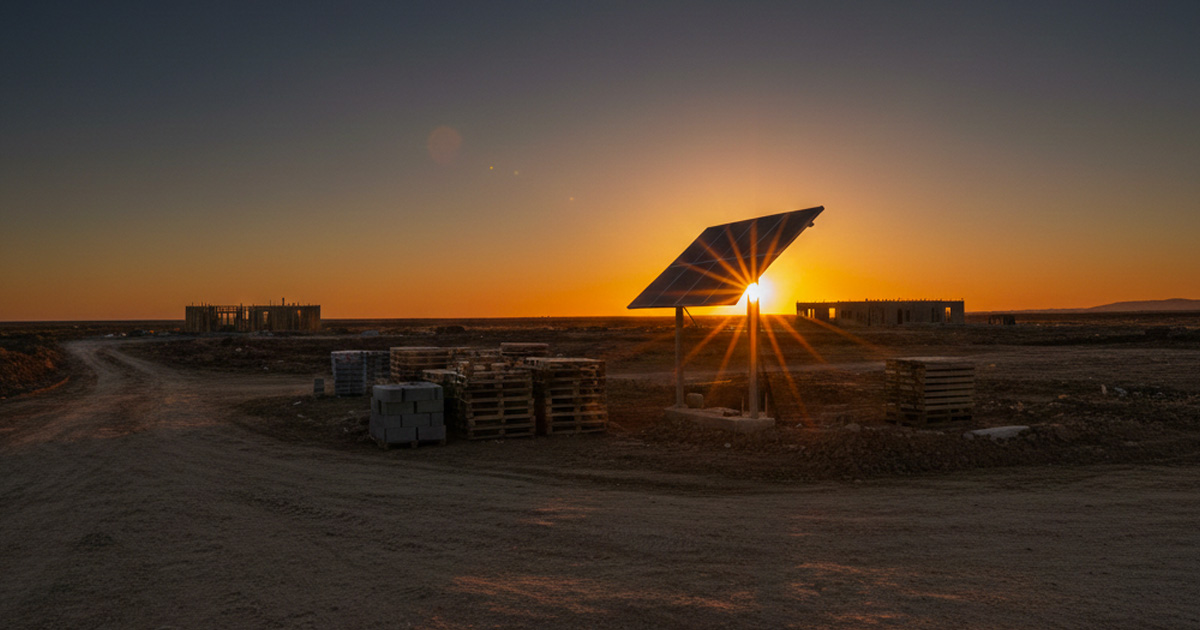
You found the perfect site. Flat ground, good access, away from residential complaints. There's just one problem: no power lines for miles, and the nearest internet connection is a 20-minute drive away. For construction managers facing this scenario, traditional security options feel like choosing between expensive infrastructure or crossing your fingers and hoping nothing disappears overnight.
This is where solar-powered surveillance changes everything. By combining solar panels, battery backup systems, and cellular connectivity, modern security solutions like The Watchtower deliver professional-grade protection without needing a single utility connection. Solar plus cellular equals security anywhere, deployed in days instead of weeks.
The Hidden Costs of Traditional Security Infrastructure
Most construction managers learn about these costs the hard way. You get a quote for security cameras, and it seems reasonable—until you start adding up everything else required to make them work.
Trenching and Electrical Work
Running power to a remote jobsite isn't just expensive; it's often the biggest line item in your security budget. Trenching costs typically run $15-30 per foot, depending on soil conditions, distance, and local labor rates. For a site 500 feet from the nearest power source, you're looking at $7,500-15,000 before a single camera gets mounted. Add permit fees, inspections, and potential delays waiting for utility companies, and your security timeline stretches from days to weeks.
Then there's the ongoing vulnerability. Exposed power cables running across active construction zones face constant risk from heavy equipment, vandalism, or simple accidents. When those lines get cut, your security goes dark until an electrician can respond.
Generator Dependencies and Their Drawbacks
Some managers turn to generators as a temporary solution. While this avoids trenching costs, it introduces a different set of problems. Fuel becomes a recurring expense and logistical headache—someone has to monitor levels, coordinate deliveries, and handle storage safely. Generators also create noise complaints, especially on residential projects near existing homes, and they represent attractive theft targets themselves. A $3,000 generator powering your security can become the very thing thieves target first.
Delayed Deployment = Extended Risk
Every day spent waiting for utility connections or generator setups is another day your site sits unprotected. On residential construction projects, where HVAC units, copper wiring, and appliances arrive in phases, this timing gap creates predictable vulnerability windows that experienced thieves exploit.
How Solar Surveillance Actually Works
Understanding the technology helps explain why solar-powered systems have become the preferred choice for forward-thinking construction managers.
Self-Contained Power Generation
Modern solar security systems like The Watchtower use high-efficiency solar panels paired with substantial battery banks. During daylight hours, the panels generate more power than the cameras and cellular equipment consume, with excess energy stored in batteries. This stored power keeps the system running through nights, cloudy days, and extended periods without direct sunlight. Most quality systems carry 3-5 days of battery backup, meaning your security continues even through a week of overcast weather.
Cellular Connectivity Eliminates Internet Dependencies
The second half of the equation is connectivity. Rather than relying on WiFi networks that require their own infrastructure, cellular-enabled security systems connect directly to major carrier networks. This means real-time video streaming, motion alerts, and remote access work anywhere you get a cell signal—which covers the vast majority of construction sites in developed areas.
Weather-Resistant Design
Construction sites don't pause for weather, and neither should your security. Professional solar surveillance units are built to IP65+ standards, meaning they withstand rain, snow, dust, and temperature extremes. The sealed enclosures protect electronics while the ruggedized mounting hardware stands up to wind and physical impacts.
Minimal Installation Requirements
Perhaps the most significant advantage is deployment speed. Because the entire system is self-contained, installation involves positioning the unit, securing it to the ground, and activating the cellular connection. Professional teams can have a site fully protected within 48 hours of your initial call, compared to weeks for traditional hardwired systems.
The ROI Story: Real Numbers for Real Projects
Cost comparisons tell the story better than any feature list. Consider a typical six-month residential construction project requiring surveillance for a 2-acre site.
Traditional Hardwired System Costs
- Trenching and electrical work: $10,000-20,000
- Camera equipment and installation: $5,000-8,000
- Monthly monitoring/service: $200-400 x 6 months = $1,200-2,400
- Total six-month cost: $16,200-30,400
Solar Surveillance Rental (The Watchtower)
- Monthly rental: Starting at $300/month x 6 months = $1,800+
- Professional installation: Included
- Removal at project end: Included
- Total six-month cost: Starting at $1,800
The difference is substantial—often $15,000-25,000+ in savings for a single project. But the financial benefits extend beyond direct cost comparisons.
Eliminating Hidden Costs
Solar surveillance removes ongoing expenses that nickel-and-dime traditional security budgets. No electrician call-outs when power issues arise. No fuel deliveries or generator maintenance. No permit renewals or utility connection fees. The monthly rental covers everything: equipment, connectivity, maintenance, and support.
Capital Expense vs. Operational Expense
For construction companies, the rental model offers additional accounting advantages. Rather than tying up capital in purchased equipment that depreciates and requires storage between projects, solar surveillance converts security from a capital expense to an operational one. You pay for protection only when you need it, and you never worry about equipment becoming obsolete or damaged in storage.
When Solar Makes Sense (And When It Doesn't)
Solar surveillance isn't the answer for every situation, though it covers far more scenarios than most managers initially assume.
Perfect Applications
Solar-powered systems excel on remote residential developments where infrastructure hasn't caught up to construction schedules. They're ideal for phased projects where security needs move as development progresses. Temporary sites, renovation projects in established neighborhoods where trenching would disrupt existing landscaping, and any situation requiring rapid deployment all favor solar solutions.
The flexibility factor matters more than many realize. When your current project wraps, the surveillance unit moves to your next site. This portability means you're never paying for idle equipment or scrambling to protect new locations.
Less Ideal (But Still Functional) Scenarios
Permanent facilities with existing power infrastructure might seem like poor candidates for solar, but even here the technology offers advantages. The ability to reposition cameras as site layouts change and the elimination of electrical permitting make solar worth considering even when power is available.
The Bottom Line
Solar-powered surveillance isn't just a workaround for sites without power—it's a smarter approach to construction security, period. The math doesn't lie: starting at $300/month versus $15,000+ for traditional infrastructure, deployed in 48 hours versus weeks, and portable to your next project instead of left behind.
For construction managers running multiple projects, the rental model means you're never paying for idle equipment and never scrambling to protect new sites. One system follows you from job to job, paying for itself on every project.
Related reading:
- How Construction Managers Are Losing $1B+ to Jobsite Theft—And How to Stop It
- 7 Questions to Ask Before Choosing a Surveillance System
Ready to see the ROI for yourself?
Get a custom quote for your jobsite in under 24 hours. No obligation, no long-term contracts.